

We all know technology advances every day. The property sector isn’t immune to all the changes taking place, which means that in the construction of the future the ways we design and build our homes will change considerably.
Some examples of technology in our homes are houses that rotate to find the best orientation and houses that grow their own food.
The truth is that today we can already see some of the techniques and materials that will revolutionise the market. Here they are.
The construction of the future starts today
If we stop to think about how construction has evolved over the years, we realise there are more and more situations where technology replaces human beings.
We’re no longer the ones making the effort. Now we put that effort into creating machines and robots that do the heaviest jobs for us.
The importance of robotics in construction

One example is bridge building. Robots transport and place huge parts on a massive scale, cutting project times.
We can say that in a short time more than 25% of construction will be done using robotics, although, as always, some Asian countries have already exceeded that figure.
That’s why companies such as Construction Roboticsare making a safe bet on the market with their SAM 100 robot, capable of successfully completing an entire build while saving time and effort. After all, who wouldn’t like construction works to take considerably less time?

Construction contracts of the future will change too
You may be wondering what we mean, but let us ask you… How many times have you had the feeling of paying too much for a service that took longer than it should have?
That is, those endless works where you have the feeling that the project isn’t moving as fast as it could.
Or worse still, not as efficiently as you know it could.

We’ve surely all been in this situation at some point, but what could the solution be? We have the answer: contracts based on worker performance. This would improve transparency and give the client peace of mind.
With the growth of the Internet of Things (IoT), companies will compete differently, not only on the price of the service as the maximum profit, but also on things like quality and speed of delivery.
3D-printed construction
All this brings us to the world of 3D printing, a growing sector that claims to be the way the houses of the future will be built,
above all because of its strong commitment to recyclable, sustainable and eco-friendly materials.
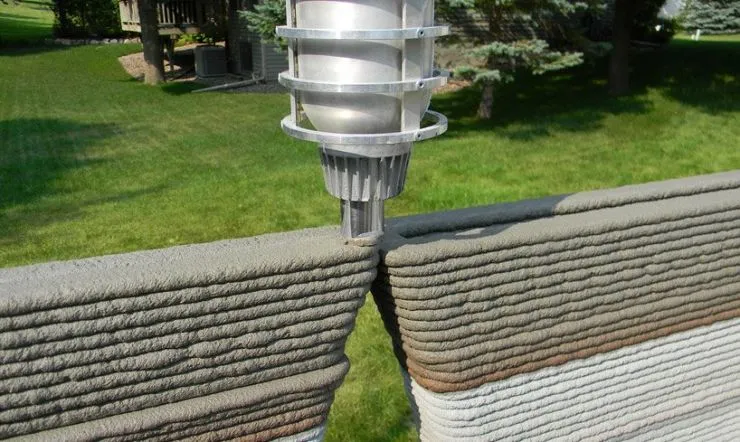
Some sources claim that by 2022 more than 50% of construction will be done with modular or 3D printing systems.
This isn’t surprising given the need for work to be carried out quickly and effectively. Nor should we forget the creation of new, cheaper building materials which, combined with technology, will make a considerable difference to the final price. And this time, to the consumer’s benefit.
How do you see the construction of the future? If you imagine it differently from how we’ve described it, let us know in the comments.
Share this article if you found it interesting and are part of construction innovation. 🙂
Images: Ovacen, Destino Negocio, Empresas Imparables, Imprimalia 3d